
Missing a tooth can affect much more than the appearance of your smile. Your teeth work together as part of a larger system, supporting the way you bite, chew, speak, and maintain the structure of your jaw.
When a tooth is lost or can no longer be restored, a dental implant may offer a long-term solution designed to look, feel, and function much like a natural tooth.
But what exactly is a dental implant? And how do you know whether one might be right for you?
What Is a Dental Implant?
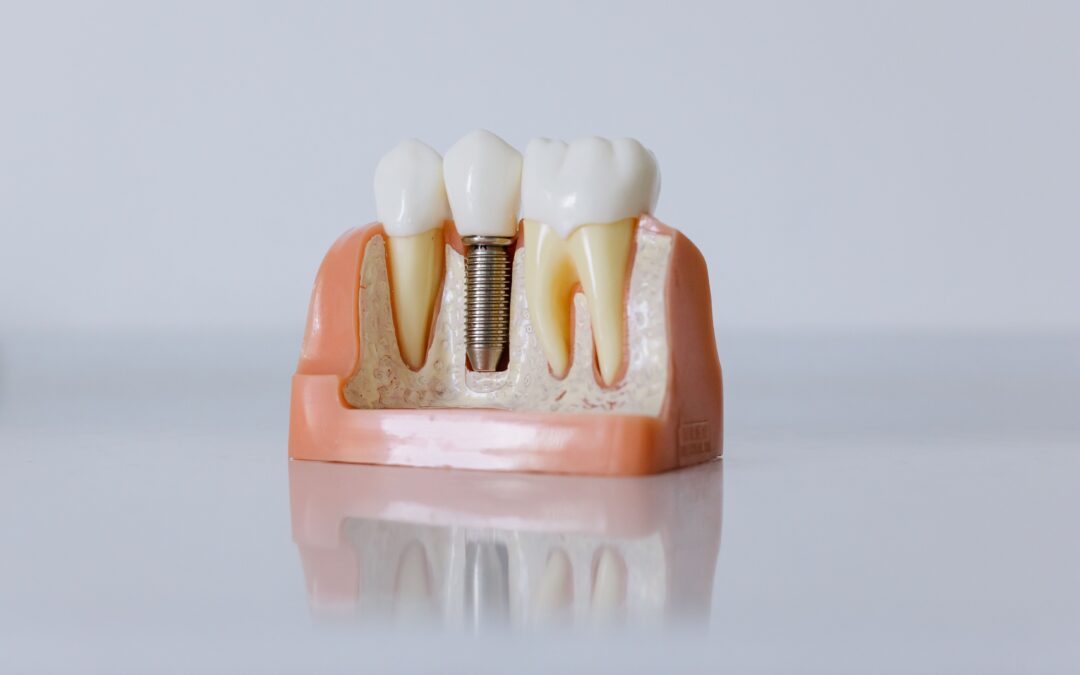
A dental implant is a small, biocompatible titanium post that is placed into the jawbone where a natural tooth root once was. Over time, the surrounding bone can gradually integrate with the implant, creating a stable foundation for a custom restoration.
Once the implant has healed and is ready to support a restoration, it can be used to replace a missing tooth with a dental crown or as part of a larger implant-supported restorative plan.
Unlike a traditional bridge, which generally relies on neighboring teeth for support, an implant replaces the missing tooth at the root level. This allows us to restore the space while considering the health and structure of the surrounding teeth.
Why Replacing a Missing Tooth Matters
It can be tempting to think of a missing tooth as primarily a cosmetic concern—especially when the space isn’t easily visible. But every tooth has a role within your bite.
When a tooth is missing, neighboring teeth may gradually shift toward the open space. Your bite and chewing patterns can change, and the bone in the area that once supported the tooth may begin to change over time because it is no longer receiving the same stimulation.
Replacing a missing tooth can help restore function, support a balanced bite, and preserve the integrity of your overall smile.
What Can Dental Implants Replace?
Dental implants aren’t limited to replacing a single tooth. Depending on your individual needs, implants may be incorporated into treatment to replace:
- A single missing tooth with an implant-supported crown
- Multiple missing teeth as part of an implant-supported restoration
- A larger span of missing teeth using strategically placed implants
- Teeth that can no longer be predictably restored when removal and replacement are determined to be the appropriate treatment
Because every patient’s mouth, bite, bone structure, and dental history are different, there isn’t one implant treatment plan that works for everyone.
What Does the Dental Implant Process Look Like?
Successful implant treatment begins well before the implant itself is placed.
At Meyer Family Dentistry, we take a comprehensive approach to planning. That may include evaluating your teeth and gums, your bite, the health and volume of the available bone, neighboring anatomy, and your overall restorative needs.
Three-dimensional CBCT imaging can provide detailed information about the jawbone and surrounding structures that cannot be fully evaluated with traditional two-dimensional dental X-rays alone.
If an implant is appropriate, the implant is surgically placed into the planned position within the jawbone. The area is then given time to heal and integrate with the implant.
Once the implant is stable and ready for restoration, a custom restoration can be created to restore the appearance and function of the missing tooth or teeth.
The exact timeline varies from patient to patient. Some cases may require additional treatment before implant placement, while others may follow a more straightforward sequence.
Am I a Candidate for a Dental Implant?
Many adults with missing or failing teeth may be candidates for implant treatment, but an evaluation is essential.
Factors such as available bone, gum health, the location of the missing tooth, your bite, medical history, medications, oral hygiene, and other individual considerations can all influence treatment planning.
In some cases, additional procedures may be recommended to create a healthier or more predictable foundation before an implant is placed.
That’s why the first step isn’t deciding that you need an implant. It’s determining what treatment option makes the most sense for your specific situation.
What If My Tooth Hasn’t Been Removed Yet?
You don’t necessarily have to wait until a tooth is missing to start discussing your options.
If you have a tooth that is fractured, repeatedly causing problems, significantly damaged, or no longer predictably restorable, planning ahead can be valuable. Understanding your options before a tooth is removed allows your dentist to consider the entire restorative plan—including what may eventually replace the tooth.
Whenever possible, the goal is to preserve your natural teeth. When that is no longer the most predictable option, having a plan for what comes next can make the process much less overwhelming.
Restoring More Than the Space
Dental implant treatment isn’t simply about filling a gap.
A well-planned restoration should fit into the larger picture of your oral health—your bite, neighboring teeth, gums, bone, function, comfort, and appearance all matter.
At Meyer Family Dentistry, implant treatment is approached as part of the overall health and function of your smile rather than as an isolated procedure. Our goal is to help you understand your options, determine what is appropriate for your individual needs, and create a treatment plan designed with the long term in mind.
Ready to Talk About Your Options?
If you’ve been living with a missing tooth, have a tooth you’re concerned may not be restorable, or have been putting off exploring your replacement options, we’re happy to help you understand what comes next.
Contact Meyer Family Dentistry in Northwood, New Hampshire, to schedule a comprehensive evaluation and discuss whether dental implant treatment may be right for you.